Leave Your Message

2026 Top Aluminium Bus Duct Manufacturers and Suppliers

The 2026 market for aluminium bus duct systems reflects growing demand for safer, cleaner, and more flexible power distribution. Manufacturers and suppliers now serve factories, data centers, commercial buildings, airports, and renewable energy facilities. Aluminium Bus Duct solutions can reduce structural load while providing efficient current distribution over long distances. Their value depends on more than conductor material.

This guide examines leading companies through practical purchasing criteria. These include rated current, short-circuit withstand capacity, insulation quality, enclosure protection, heat performance, and connection design. Factory testing matters. So does field experience. A reliable supplier should provide clear drawings, test certificates, installation instructions, and responsive technical support. Certification against recognized standards also strengthens buyer confidence, especially for projects involving strict electrical and fire-safety requirements.

Names alone do not prove performance. A supplier may appear impressive online but offer limited commissioning support. That weakness can become expensive during installation. This ranking therefore considers manufacturing capability, product consistency, customization, delivery reliability, and documented project experience. It also recognizes that regional standards and site conditions can change the final choice. No universal winner exists. Copper may still suit some high-load applications, while aluminium can offer practical advantages elsewhere. Careful comparison remains essential. Buyers should verify specifications directly and request recent project references before signing a contract. The market changes quickly, and even experienced professionals can overlook small details.
2026 Top Aluminium Bus Duct Manufacturers and Suppliers

What Is an Aluminium Bus Duct and How Does It Work?

2026 Top Aluminium Bus Duct Manufacturers and Suppliers

What Is an Aluminium Bus Duct and How Does It Work?

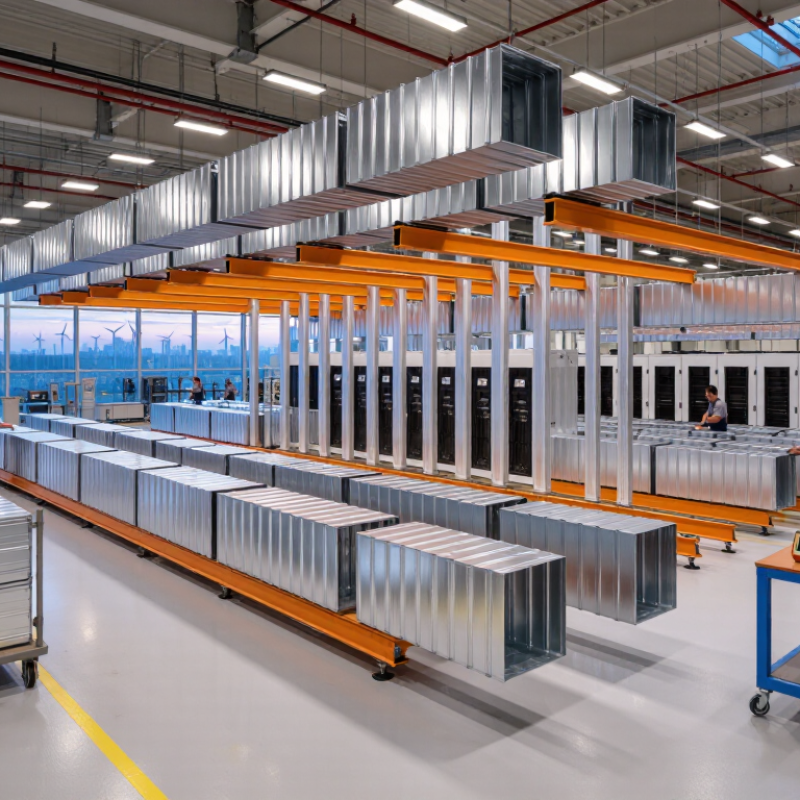
An aluminium bus duct is a prefabricated power distribution system. It uses flat aluminium conductors inside a protective metal enclosure. These conductors carry electricity between transformers, switchboards, and production equipment. It is modular. Sections connect through engineered joints and tap-off units. When a tap-off box closes, it draws power without long cable runs. This makes routing clearer inside factories, towers, and data facilities.

Aluminium weighs about one-third as much as copper, while offering roughly 61% of copper’s conductivity. That balance can reduce structural loads and simplify installation.

The IEA Electricity 2024 report expects global electricity demand to grow by about 3.3% annually from 2024 to 2026. More demand increases the need for compact, maintainable distribution systems. IEC 61439-6 provides key requirements for busbar trunking systems, including temperature rise and short-circuit performance.

The weak point is often installation, not the metal. Poorly torqued joints can create hot spots, discoloration, and costly downtime. Field teams should verify torque, insulation clearance, enclosure bonding, and thermal conditions.

Real sites are messier. The International Aluminium Institute reports that recycled aluminium requires about 5% of the energy used for primary production. That benefit matters, but only when suppliers document material quality and recycling content.

Key Types and Applications of Aluminium Bus Duct Systems

Aluminium bus duct systems use aluminium conductors inside a protected enclosure to distribute power efficiently. Their lighter weight can simplify lifting, installation, and support design. However, aluminium has higher electrical resistance than copper, so engineers must verify voltage drop and temperature rise carefully.

Common types include air-insulated bus ducts, sandwich bus ducts, feeder bus ducts, and plug-in bus duct systems. Air-insulated designs suit straightforward power routes with larger clearances. Sandwich systems use compact conductor spacing and strong insulation between phases. Feeder ducts carry continuous power, while plug-in versions support flexible connections for equipment changes.

Applications vary by load profile. Manufacturing plants use feeder ducts between transformers, switchboards, and production lines. Commercial towers often select plug-in systems for floor-by-floor distribution. Data centers require careful coordination of redundancy, cooling, short-circuit strength, and maintenance access. Renewable energy facilities may use aluminium bus ducts between inverters and distribution equipment, but outdoor sealing needs close attention.

A reliable design checks enclosure protection, joint torque, expansion movement, harmonic heating, and fault-current ratings. IEC 61439-6 can guide verification and testing. Site inspections repeatedly reveal loose joints and poorly aligned plug-in units. Small installation errors can create hot spots. Aluminium systems also need compatible connection materials, because oxidation and thermal cycling can weaken contacts over time. Cost estimates should include supports, joint compounds, testing, and future capacity. The cheapest layout is not always the most dependable.

How to Evaluate Aluminium Bus Duct Manufacturers and Suppliers

2026 Top Aluminium Bus Duct Manufacturers and Suppliers

How to Evaluate Aluminium Bus Duct Manufacturers and Suppliers

Choosing an aluminium bus duct supplier requires more than comparing prices. Check the conductor alloy, rated current, insulation system, and enclosure strength. Reliable manufacturers provide clear temperature-rise data and short-circuit test reports. Ask whether each result comes from an independent laboratory or internal testing. Traceable quality records matter when a project includes many production batches.

Review the joint design carefully. Loose connections can create hot spots, especially in dusty plant rooms. Examine plating quality, torque guidance, IP protection, and expansion provisions. A capable supplier should provide installation drawings, maintenance instructions, and sample sections for inspection. Factory experience also matters. Visit the production site if possible. Observe material storage, assembly discipline, and final inspection practices. A polished catalog can still hide weak process control.

Tips: Request three recent project references with similar load conditions. Compare actual delivery records, not promises. Confirm warranty terms in writing, including response time and replacement procedures. Ask for factory acceptance testing before shipment. Do not ignore communication quality; delayed technical answers may become costly later. One honest limitation is useful. No supplier is perfect, and even strong manufacturers may lack experience with your climate, seismic conditions, or installation layout. Evaluate that gap openly before approval.

Leading Aluminium Bus Duct Manufacturers and Suppliers in 2026

Leading Aluminium Bus Duct Manufacturers and Suppliers in 2026

Electricity demand is reshaping bus duct procurement. The International Energy Agency forecasts global electricity demand to grow by about 3.4% annually from 2024 to 2026. Data centers, factories, and logistics facilities need compact power distribution. Aluminium conductors offer lower weight and easier handling than copper. They also require careful joint design.

Leading aluminium bus duct manufacturers and suppliers now compete through tested engineering, not catalogue claims. Buyers should request IEC 61439-6 verification, temperature-rise results, short-circuit withstand data, and declared IP protection. Reliable suppliers provide drawings, alloy details, joint torque values, and factory inspection records. Small details matter. A loose joint can create heat, downtime, and expensive repairs.

The International Aluminium Institute reports that global primary aluminium production has remained above 70 million tonnes annually in recent years. This supports broad material availability, but availability does not guarantee consistent conductor quality. Suppliers should show traceability from billet to finished section. They should also explain coating, oxidation control, installation tolerances, and expansion allowances. Market research reports from MarketsandMarkets identify rising industrial construction and data-center investment as major busbar trunking drivers. Forecasts vary, however, and some appear too optimistic. A practical 2026 shortlist should compare lifecycle cost, tested performance, delivery reliability, and after-sales engineering support rather than accepting growth figures without scrutiny.

Quality Standards, Pricing Factors, and Selection Guidelines

2026 Top Aluminium Bus Duct Manufacturers and Suppliers

When evaluating aluminium bus duct manufacturers and suppliers, quality evidence matters more than polished brochures. Check compliance with IEC 61439-6 or applicable regional standards. Request routine test records, including insulation resistance, temperature rise, dielectric strength, and short-circuit performance. Reliable suppliers should provide material traceability, controlled assembly procedures, and clear inspection reports. Factory experience also matters, especially for high-current systems, outdoor installations, and complex building layouts.

Pricing depends on aluminium grade, current rating, enclosure material, IP protection, joint design, and customization. Copper contact surfaces may increase the quotation but improve connection reliability. Transport distance, installation accessories, testing, and after-sales support can change the final cost significantly. A low price can look attractive. It may hide missing tests or weaker fittings. I have found that comparing identical specifications is harder than expected, so every quotation should include a detailed technical schedule.

Tips: Ask for sample test documents and recent project references. Confirm conductor dimensions, joint torque values, warranty terms, and delivery conditions. Inspect how suppliers manage corrosion protection and thermal expansion. Do not select by price alone. A supplier with responsive engineers can prevent costly redesigns. Still, references are not proof of perfect performance; verify them independently and review the installation environment before approval.