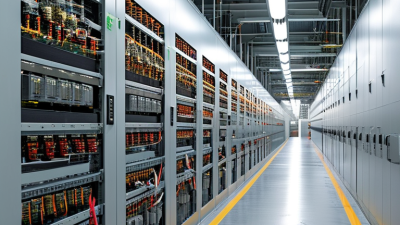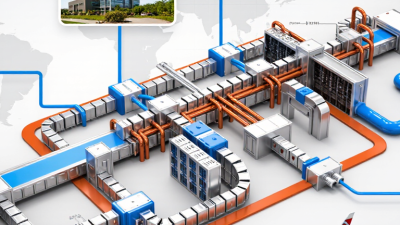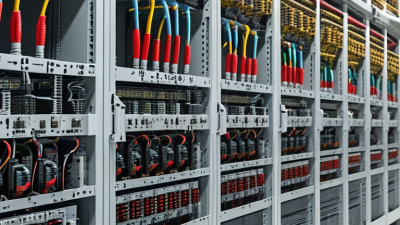
Selecting the right electrical distribution equipment can shape a facility’s safety, uptime, and expansion costs. For global buyers, this decision involves more than comparing current ratings or product prices. Busway Systems Electrical solutions must match building layouts, load profiles, environmental conditions, and local installation practices.
This guide reviews ten leading busway systems for industrial plants, commercial towers, data centers, and infrastructure projects. Each option is considered through practical criteria, including conductor materials, enclosure strength, tap-off flexibility, heat performance, protection levels, and maintenance access. A system that works well in a clean office may struggle in a dusty factory. Small details matter.
Real projects often reveal the gaps.
Supplier experience also deserves careful attention. Buyers should verify factory quality controls, test reports, certification scope, warranty terms, and technical support after delivery. International projects may require coordination across different voltage systems, inspection procedures, and engineering expectations. Product claims should be checked against project conditions, not accepted without questions.
There is no universal winner. Cost, availability, installation skill, and future expansion can change the final choice. Some systems appear economical until accessories, labor, and spare parts are included. Others offer strong modularity but require stricter installation discipline. This review aims to provide a balanced starting point, while recognizing that field performance depends on correct design, qualified installation, and regular inspection. Buyers should still confirm every specification with the manufacturer and the project’s responsible engineer.
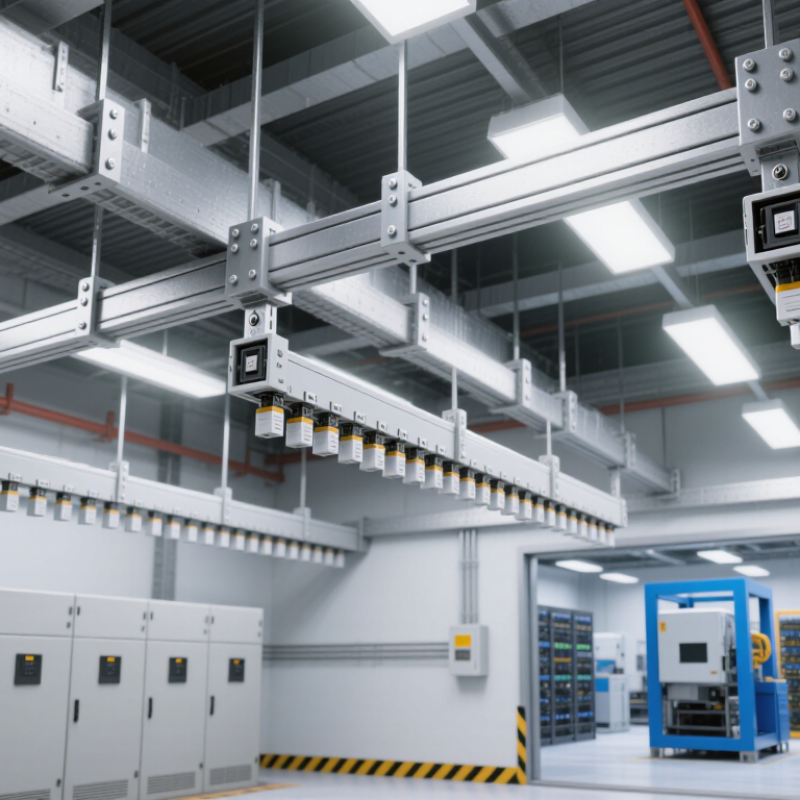
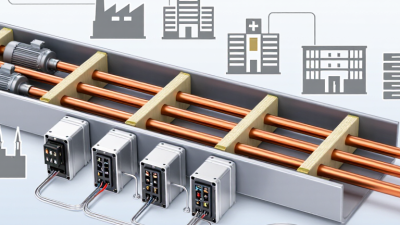
Electrical busway systems, also called busbar trunking systems, distribute power through enclosed copper or aluminum conductors. Unlike traditional cable runs, they use a modular metal enclosure with insulated busbars, joint packs, supports, and plug-in tap-off units. IEC 61439-6 defines key requirements for low-voltage busbar trunking assemblies, including temperature rise, short-circuit strength, insulation, and mechanical protection.
The operating principle is direct. Incoming power enters the busway, then flows along parallel conductors with low impedance. Tap-off units connect equipment at selected points, allowing flexible load expansion without replacing long cable sections. Enclosures also help control contact risks and contain thermal effects. The IEA Electricity 2024 report projects global electricity demand to grow by an average of 3.4% annually through 2026. That growth increases pressure on compact distribution systems in factories, buildings, and data centers.
Heat remains practical, not theoretical. Engineers must check conductor loading, ambient temperature, joint torque, ventilation, and fault levels. A poorly tightened joint can create a hot spot under continuous load. Real installations are less tidy. Dust, moisture, and rushed commissioning still cause avoidable failures. The 2024 Uptime Institute Global Data Center Survey identifies power availability as a continuing operational concern, reinforcing the need for tested protection and monitoring. Buyers should compare rated current, IP enclosure rating, short-circuit withstand, tap-off spacing, maintenance access, and compliance documentation.
Busway selection starts with load behavior, not catalog size. Sandwich busway suits factories, warehouses, and dense commercial floors. Its compact conductors reduce voltage drop and simplify routing. Air-insulated busway offers easier inspection and heat dissipation. It can fit demanding industrial environments.
Feeder busway carries power between transformers, switchboards, and major distribution points. Plug-in busway supports flexible connections for production lines and data halls. Rising busway serves high-rise buildings, where vertical power distribution saves valuable shaft space. Outdoor-rated systems support infrastructure and renewable-energy facilities. Details matter.
The International Energy Agency’s Electricity 2024 report projects data-center electricity demand could more than double by 2026 from 2022 levels. This growth increases demand for modular, serviceable power distribution. Uptime Institute reports that power failures remain a major cause of serious data-center outages. Buyers should therefore check short-circuit ratings, thermal performance, ingress protection, and maintenance access. IEC 61439-6 provides a useful framework for verifying busway assemblies. Regional rules still differ, and this is where many specifications become weak. A system may meet one test but fail a local installation requirement. Experienced teams should review ambient temperature, harmonic loads, fire separation, and future expansion before ordering.
Ten Leading Electrical Busway Systems for Global Buyers
Ten leading electrical busway systems serve different building and industrial requirements. Their designs usually include feeder busways, plug-in busways, rising mains, and compact sandwich systems. Some use copper conductors, while others use aluminum to reduce weight and cost. Air-insulated models can simplify inspection, but compact insulated systems often save valuable installation space.
Global buyers should examine rated current, voltage, short-circuit withstand, enclosure protection, and temperature-rise performance. These details matter in factories, data centers, hospitals, and high-rise buildings. A reliable system should include tested joints, secure tap-off units, clear phase identification, and accessible maintenance points. Local electrical codes also influence grounding, fire stopping, and installation methods. Certification alone is not enough.
Measure carefully.
Project experience shows that routing space is often underestimated. A busway may fit on a drawing but conflict with sprinklers, ventilation ducts, or structural beams. Buyers should request dimensional drawings, test reports, installation manuals, and spare-part guidance before approval. Maintenance teams also need practical training, not only technical documents. One weakness remains common: product comparisons may focus on price while ignoring labor, downtime, and future expansion. A lower initial cost can become expensive after repeated shutdowns or difficult joint inspections. Controls, documentation, and site coordination deserve equal attention.
| No. | Busway System Type | Typical Application | Typical Rated Current | Typical Voltage | Conductor Material | Protection Rating | Conductor Configuration | Key Advantages | International Reference Standards |
|---|---|---|---|---|---|---|---|---|---|
| 1 | Sandwich-Type Compact Busway | Commercial buildings, industrial facilities, and data centers | 160–6,300 A | Up to 1,000 V AC | Copper or aluminum | IP40–IP66 | 3-phase, 3-wire or 4-wire; optional PE | Low impedance, compact dimensions, efficient heat dissipation, and flexible tap-off locations | IEC 61439-1 and IEC 61439-6; UL 857 where applicable |
| 2 | Air-Insulated Busway | Manufacturing plants, utility rooms, and heavy industrial distribution | 400–5,000 A | Up to 1,000 V AC | Copper or aluminum | IP31–IP54 | 3-phase, 3-wire or 4-wire; separate PE possible | Simple construction, accessible inspection, and suitability for high-current applications | IEC 61439-6; IEC 60529 for enclosure protection |
| 3 | Plug-In Feeder Busway | Factories, warehouses, logistics centers, and production lines | 250–1,600 A | Up to 1,000 V AC | Copper or aluminum | IP40–IP55 | 3-phase, 4-wire or 5-wire | Supports movable tap-off units, quick load changes, and simplified production-line expansion | IEC 61439-6; IEC 60529; local installation codes |
| 4 | Rising Main Busway | High-rise residential, office, hotel, and mixed-use buildings | 250–6,300 A | Up to 1,000 V AC | Copper or aluminum | IP42–IP55 | 3-phase, 4-wire or 5-wire | Space-efficient vertical distribution with floor-level tap-off access | IEC 61439-6; IEC 60364 installation principles |
| 5 | Lighting Busway | Retail stores, workshops, warehouses, and modular lighting layouts | 25–63 A | 230/400 V AC | Copper or aluminum | IP20–IP55 | 1-phase or 3-phase with neutral and PE | Fast luminaire relocation, low installation effort, and modular branch connections | IEC 61439-6; IEC 60598 interface requirements where applicable |
| 6 | Fire-Resistant Busway | Emergency power, smoke-control systems, hospitals, and transport facilities | 400–4,000 A | Up to 1,000 V AC | Copper or aluminum | Project-specific enclosure rating | 3-phase, 4-wire or 5-wire | Designed for circuit integrity during defined fire-exposure periods when tested as a complete assembly | IEC 60331 test principles; EN 1366-8 or local fire-resistance requirements |
| 7 | Outdoor and Weatherproof Busway | Outdoor substations, infrastructure projects, and process plants | 400–5,000 A | Up to 1,000 V AC | Copper or aluminum | IP55–IP66 | 3-phase, 3-wire or 4-wire; PE included as required | Improved resistance to dust, rain, moisture, and environmental contamination | IEC 61439-6; IEC 60529; IEC 60068 environmental testing where specified |
| 8 | Data Center Busway | Server rooms, colocation facilities, and high-density IT environments | 250–1,600 A | Up to 600 V AC | Copper or aluminum | IP42–IP55 | 3-phase, 4-wire or 5-wire with high-density tap-offs | Scalable power distribution, rapid rack deployment, and support for redundant layouts | IEC 61439-6; IEC 60364; applicable data-center design standards |
| 9 | High-Short-Circuit-Rating Busway | Large industrial plants, utility distribution, and motor-intensive facilities | 1,000–6,300 A | Up to 1,000 V AC | Copper or aluminum | IP40–IP66 | 3-phase, 3-wire or 4-wire with PE | Available with tested short-time withstand and peak withstand ratings for demanding networks | IEC 61439-1 and IEC 61439-6 short-circuit verification requirements |
| 10 | Flexible and Special-Route Busway | Equipment connections, seismic areas, retrofit projects, and restricted layouts | 160–1,000 A | Up to 1,000 V AC | Copper or aluminum | IP40–IP65 | 3-phase, 3-wire or 4-wire; PE as required | Accommodates complex routing, movement, vibration, and limited installation space | IEC 61439-6; project-specific mechanical and environmental verification |
| Technical values shown are typical configurable ranges for comparison. Final ratings, temperature-rise performance, short-circuit withstand, fire resistance, enclosure protection, and certification requirements must be verified against the selected assembly, installation conditions, and applicable local regulations. | |||||||||
For global buyers, the “10 best” electrical busway systems should be judged by verified safety data, not catalog claims. The IEA’s Electricity 2024 report projects data-center electricity use could exceed 1,000 TWh annually by 2026. That growth increases pressure on compact, maintainable power distribution. Specify IEC 61439-6 compliance for busbar trunking assemblies, or UL 857 where North American approval is required. NFPA 70 Article 368 also addresses busway installation, protection, and accessibility.
Check rated current, operating voltage, short-circuit withstand, and temperature-rise results. Do not accept a single laboratory figure without installation conditions. IP ratings under IEC 60529 matter in dusty factories, humid utility rooms, and outdoor transitions. Fire barriers, earth continuity, joint torque, and tap-off interlocking require physical verification. Small installation errors can create hot joints.
They often go unnoticed.
The Uptime Institute’s 2024 Global Data Center Survey continues to identify power-related events among the most serious outage risks. This supports selecting systems with clear maintenance access, monitoring points, and documented coordination studies. Ask for type-test reports, routine-test records, seismic data when relevant, and derating tables for altitude or ambient heat. Copper is not automatically safer than aluminum; workmanship and connection control often decide performance. A practical factory inspection should include thermal scanning under load. Standards help, but site evidence matters more than polished brochures.
My own caution is simple: “compliant” may describe a component, not the complete installed system.
How to Compare and Select the Right Busway System
Global electricity demand is forecast to grow by about 4% in 2024 and 2025, according to the IEA Electricity 2024 report. Renewable capacity is also expected to expand by 5,500 GW by 2030, according to the IEA Renewables 2024 report. These figures make electrical distribution flexibility more important. A busway system should match present loads and future expansion plans. Compare rated current, operating voltage, short-circuit withstand, enclosure protection, and ambient temperature limits. Check IEC 61439-6 compliance and local electrical requirements.
Do not judge systems by current rating alone. Measure the real route, including bends, floor openings, ceiling height, and maintenance access. A compact design may reduce installation work, but crowded tap-off points can slow future changes. Review conductor material, joint design, plug-in unit security, and thermal performance under continuous load. Ask for verified test reports, not only marketing tables. Field teams often discover that unclear joint instructions create avoidable delays.
Keep spare capacity realistic. Oversizing everything increases cost and may complicate handling. Undersizing creates heat and expansion problems. The better choice depends on load diversity, fault levels, environmental conditions, and service strategy. I would also compare delivery time and replacement-part availability. This step is easy to overlook. Perform a documented site review before approving the final configuration.
Representative maximum rated-current levels commonly specified for different busway applications. Actual ratings depend on the manufacturer, enclosure, ambient temperature, installation method, and applicable standards such as IEC 61439-6 or UL 857.
Use current capacity as an initial filter, then compare voltage rating, short-circuit withstand, ingress protection, conductor material, installation environment, tap-off flexibility, certification, and total lifecycle cost.