Leave Your Message
-
E-mail
-
Whatsapp

-
WeiChat

China’s electrical infrastructure is expanding quickly, and busduct systems are becoming more visible in factories, data centers, commercial towers, and transport projects. The National Energy Administration reported that China’s electricity consumption reached about 9.85 trillion kilowatt-hours in 2024, rising 6.8% year on year. This growth increases demand for compact, safe, and maintainable power distribution.
The International Energy Agency also expects electricity demand to keep growing through 2025, supported by industrial activity, cooling, electrification, and data-center investment. Market research from MarketsandMarkets identifies Asia-Pacific as a major growth region for busbar trunking systems. However, market size estimates differ. Definitions, regional coverage, and project classifications are not always consistent.
That is why this guide examines China’s Top 10 Electrical Busduct Suppliers through practical criteria. These include rated current, short-circuit strength, conductor material, enclosure protection, joint design, temperature-rise testing, certification, delivery capability, and after-sales support. A polished catalogue is not enough.
Dr. Wei Liu, an independent power-distribution engineer, offers a useful field reminder: “A busduct system is only as reliable as its weakest joint.” The statement is simple. Installation still matters.
Our review focuses on manufacturers serving real projects, not merely online visibility. It considers factory experience, testing discipline, customization, and documented performance. Some suppliers publish limited technical information, which makes comparison imperfect. That limitation deserves attention.
For engineers, contractors, and procurement teams, Busduct Electrical selection should balance safety, lifecycle cost, installation speed, and future expansion. The strongest supplier may not be the cheapest. It should be the one that performs reliably after the project is energized.
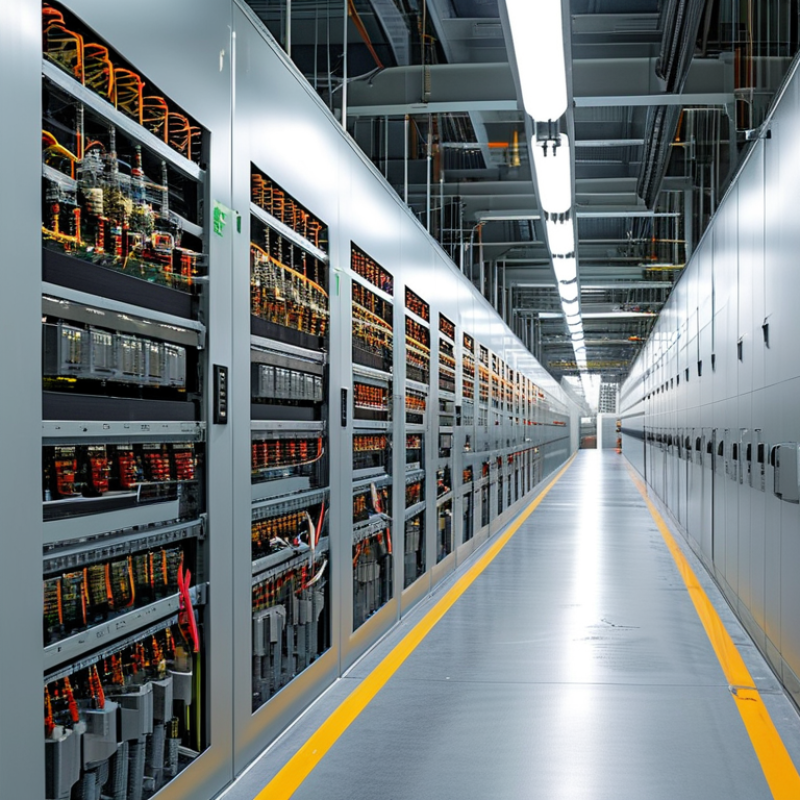
China Top 10 Electrical Busduct Suppliers
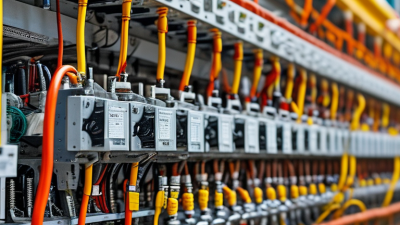
Electrical busduct, also called busbar trunking, is a factory-built system for carrying electrical power. It uses insulated copper or aluminum conductors inside a protected metal enclosure. Unlike long cable bundles, busduct provides a compact, structured route between transformers, switchboards, and distribution panels. Engineers select its current rating, short-circuit strength, insulation class, and enclosure protection before installation. These choices must match the building load and local electrical requirements.
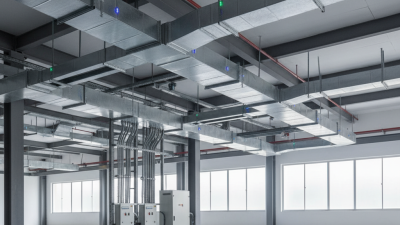
In modern power distribution, busduct reduces congestion in plant rooms and vertical risers. A straight section can run beside columns, while tap-off units feed motors, lighting panels, or production equipment. This modular design can simplify changes when a factory adds a new line. Technicians can inspect joints, torque connections, and use thermal imaging during maintenance. Small details matter. A loose joint can create heat, downtime, and a serious safety risk.
Projects in China often require careful coordination among designers, installers, and inspection teams. Site measurements should confirm clearances, wall penetrations, fire barriers, and access for future servicing. Busduct is not automatically better than cable. That assumption can fail in corrosive spaces, crowded retrofits, or poorly planned routes. Reliable suppliers therefore provide tested assemblies, traceable technical documents, installation guidance, and responsive after-sales support. In practice, the best selection balances safety, capacity, installation time, lifecycle cost, and the reality of the site.
Electrical busduct, also called busway or busbar trunking, is a prefabricated power-distribution system that uses insulated conductors inside a protective enclosure. The comparison below summarizes ten common busduct configurations and application scenarios without using company or brand data.
| No. | Busduct Configuration | Typical Current Range | Conductor Arrangement | Typical Application | Primary Advantages | Key Design Considerations | Common Reference Standard |
|---|---|---|---|---|---|---|---|
| 1 | Low-Voltage Sandwich Busduct | 250–6,300 A | Compact copper or aluminium conductors separated by insulation within a metal enclosure | High-rise buildings, commercial complexes, industrial plants and main distribution routes | Compact dimensions, low impedance, efficient heat dissipation and modular installation | Short-circuit withstand, temperature rise, joint torque, installation clearance and fire-stopping requirements | IEC 61439-6; GB/T 7251.6 |
| 2 | Low-Voltage Air-Insulated Busduct | 400–5,000 A | Conductors supported with air gaps and insulating supports inside a ventilated enclosure | Industrial power distribution, workshops and routes requiring economical high-current transmission | Simple construction, accessible inspection and comparatively flexible maintenance | Requires more installation space and careful protection against dust, moisture and conductive contamination | IEC 61439-6; GB/T 7251.6 |
| 3 | Feeder Busduct | 800–6,300 A | Continuous conductors with limited or no tap-off points along the route | Connecting transformers, switchboards, generators and large distribution panels | Reliable bulk power transfer, predictable voltage drop and reduced cable congestion | Route alignment, expansion joints, thermal movement, fault levels and connection interfaces must be verified | IEC 61439-6; GB/T 7251.6 |
| 4 | Plug-In or Distribution Busduct | 160–1,600 A | Busbar trunking equipped with designated tap-off openings and plug-in units | Factories, production lines, warehouses, retail facilities and flexible floor distribution | Fast load connection, easier reconfiguration and reduced dependence on long cable branches | Tap-off unit coordination, ingress protection, mechanical interlocking and spare capacity planning are essential | IEC 61439-6; GB/T 7251.6 |
| 5 | Rising Busduct | 400–6,300 A | Vertically arranged busbar sections with floor-level tap-off units | Residential towers, office buildings, hotels and hospital vertical distribution shafts | Efficient vertical power distribution, reduced shaft congestion and convenient floor-by-floor tapping | Seismic support, fire compartment penetration, vertical alignment, condensation control and access for maintenance | IEC 61439-6; GB/T 7251.6 |
| 6 | Aluminium-Conductor Busduct | 250–6,300 A | Aluminium conductors with suitable plated or treated connection surfaces | Long distribution routes where lower conductor weight is beneficial | Lower weight and material cost compared with equivalent copper designs, subject to proper sizing | Higher resistivity than copper, joint preparation, oxidation control, thermal performance and voltage drop | IEC 61439-6; GB/T 7251.6 |
| 7 | Copper-Conductor Busduct | 250–6,300 A | Copper conductors, commonly tin-plated or otherwise treated at connection points | Data centers, hospitals, manufacturing plants and installations with demanding electrical performance | High conductivity, compact conductor sizing and strong resistance to mechanical stress at joints | Higher material weight and cost, thermal expansion, joint quality and theft or damage protection | IEC 61439-6; GB/T 7251.6 |
| 8 | High-Protection Busduct | 400–5,000 A | Insulated conductors enclosed in a sealed or gasketed metal housing | Humid factories, parking structures, outdoor-connected areas and locations exposed to dust or water | Improved protection against environmental contamination and accidental contact | Actual IP rating, drainage, condensation, corrosion resistance and sealing of joints must match the site conditions | IEC 60529 for IP classification; IEC 61439-6 |
| 9 | Fire-Resistant Busduct System | 400–4,000 A | Busduct with a fire-resistance design or tested fire-rated enclosure and penetration system | Emergency power routes, high-rise buildings, transportation facilities and critical infrastructure | Supports circuit integrity or fire compartmentation when installed as part of a tested system | Fire rating, supporting structure, penetration seals, emergency-load requirements and complete-system testing are critical | Project-specific fire-test requirements; IEC 61439-6 where applicable |
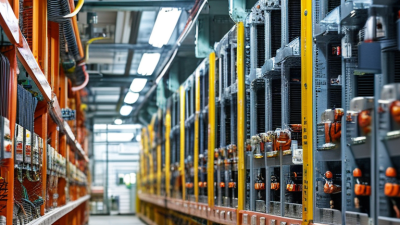
| 10 | Data-Center Busduct | 400–6,300 A | Compact low-voltage busduct with monitored tap-off units and high availability design options | Server rooms, data halls, uninterruptible power supply outputs and equipment distribution zones | Scalable capacity, rapid rack connection, reduced cable mass and improved floor-layout flexibility | Redundancy, selective coordination, harmonic current, thermal monitoring, power quality and maintenance access | IEC 61439-6; GB/T 7251.6; project data-center requirements |
Note: Current ranges are representative design ranges rather than universal product limits. Final selection should be based on rated current, voltage, frequency, short-circuit withstand, IP rating, ambient conditions, voltage drop, fire requirements and applicable local regulations.