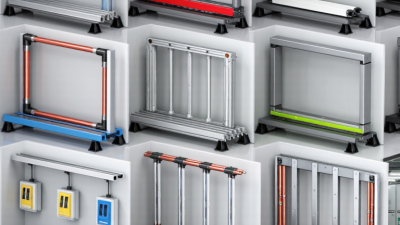
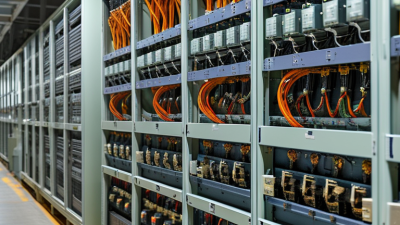
Feeder Busduct is becoming a practical choice for data centers, factories, commercial towers, and infrastructure projects. It replaces long cable runs with compact, modular power distribution. That difference matters when every meter of plant space affects cost, airflow, and maintenance access.
Market research shows strong momentum. Mordor Intelligence estimates continued growth in the global busbar trunking system market through 2029, driven by data centers, manufacturing, and urban construction. Grand View Research also identifies rising demand for reliable, space-efficient electrical distribution. However, market figures vary between reports. Their definitions and regional coverage are not always identical.
Safety remains more important than market size. IEC 61439-6 requires rigorous verification for busbar trunking systems, including temperature rise, short-circuit resistance, and insulation performance. Mike Holt, a widely recognized electrical-code educator, has repeatedly emphasized this principle: “The manufacturer’s installation instructions are part of the system.” That reminder is easy to overlook during rushed procurement.
This guide evaluates ten Feeder Busduct manufacturers for global buyers. It considers current ratings, enclosure protection, conductor materials, joint design, tap-off flexibility, testing documentation, lead times, and after-sales support. Factory photographs can help, but they do not replace certified test reports. A polished brochure is not enough.
Some suppliers may offer lower prices. Yet unclear standards, weak service networks, or inconsistent quality can create expensive problems later. Buyers should verify IEC compliance, project references, warranty terms, and local technical support before signing contracts. The ranking is useful, but not absolute. Regional approval requirements and project conditions can change the final decision.
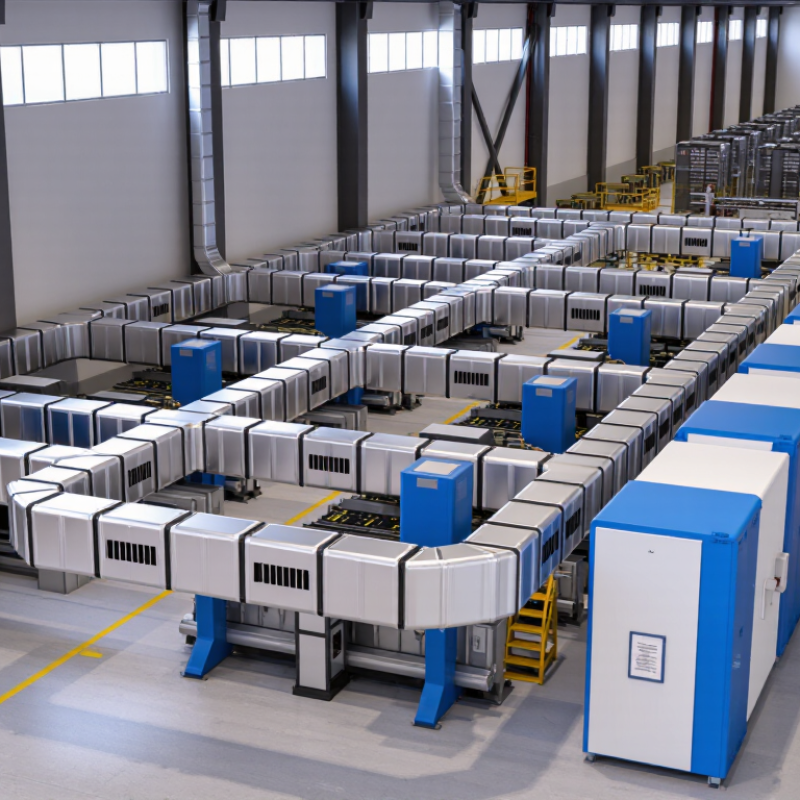
Feeder busduct is an enclosed electrical distribution system for transporting high current between transformers, switchboards, and major loads. It uses insulated conductors inside a compact metal housing. Unlike plug-in systems, feeder busduct usually delivers power along a fixed route. A 1,600-ampere section may run above a factory floor, replacing several parallel cables and large cable trays.
Manufacturer selection matters because performance depends on engineering details, not appearance. Buyers should verify rated current, voltage, short-circuit withstand, temperature rise, enclosure protection, and conductor insulation. Testing under IEC 61439-6, or relevant local requirements, should be clearly documented. A reliable manufacturer also provides layout drawings, jointing instructions, installation tolerances, and traceable routine test records. Small gaps at joints can create serious heat problems.
Global projects need more than a competitive quotation. Check whether the manufacturer has experience with humid plants, dusty workshops, vertical risers, or restricted ceiling spaces. Ask about material certificates, replacement joints, warranty response, and technical support across time zones. A polished datasheet may still hide unclear assumptions. That deserves a second review. Delivery planning also matters, since one missing elbow or flange can delay an entire electrical room. Factory inspection, sample verification, and coordination with the project’s protection study can reduce expensive corrections before energization.
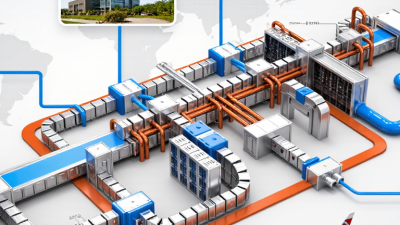
Global buyers should evaluate feeder busduct manufacturers through evidence, not attractive catalogs. The 2023 MarketsandMarkets report estimated continued growth in the busbar trunking system market, driven by data centers, factories, and commercial buildings. This growth increases supplier choice, but also increases quality differences. Ask for IEC 61439-6 design verification, temperature-rise records, short-circuit test results, and routine inspection procedures. A polished brochure is not proof.
Manufacturing experience becomes visible in small details. Check conductor alignment, joint insulation, enclosure thickness, and torque-control methods. Request sample drawings for vertical risers, outdoor sections, and fire-rated penetrations. Reliable manufacturers should provide material certificates, batch traceability, and clear replacement procedures. Their test equipment should be calibrated and independently verifiable. I would also inspect a completed installation, if possible. Site evidence often exposes weaknesses hidden during presentations.
Service capacity matters as much as electrical design. The IEA’s Electricity 2024 report projected strong global electricity-demand growth through 2026, increasing pressure on distribution infrastructure and project schedules. Compare realistic lead times, spare-joint availability, commissioning support, and response times across regions. Evaluate copper and aluminum options using lifecycle cost, not only purchase price. Warranty wording deserves careful reading. It can be vague. One overlooked issue is local technical support; remote advice may fail during a rushed shutdown. A manufacturer can meet every certificate requirement and still perform poorly in the field. Metrics, references, and factory audits create a more dependable comparison.
10 Best Feeder Busduct Manufacturers for Global Buyers?
The following profiles highlight ten leading feeder busduct manufacturers by engineering depth, testing discipline, and international support. Each profile reflects practical purchasing concerns, not advertising claims.
Manufacturer One focuses on high-current systems for factories and data centers. Its strength is detailed thermal design and documented temperature-rise testing. Manufacturer Two serves commercial towers with compact, flexible layouts. Its technical teams often assist with installation drawings and joint alignment. Manufacturer Three emphasizes harsh environments. Sealed enclosures, corrosion-resistant finishes, and tested ingress protection support demanding sites.
Manufacturer Four develops modular feeder busduct for fast project changes. Its plug-in options can reduce installation time, though compatibility must be checked carefully. Manufacturer Five is known for rigorous short-circuit testing and traceable production records. Field proof counts. Manufacturer Six supports renewable-energy facilities with outdoor-rated systems and stronger weather protection. Buyers should examine cable interfaces and grounding details. Manufacturer Seven offers broad customization for unusual voltage or routing requirements. Custom work helps, but it may increase lead times. Manufacturer Eight maintains regional service centers, which can simplify spare-part access and technical response. Manufacturer Nine concentrates on energy-efficient conductors and reduced connection losses. Actual savings depend on load profiles, not brochures. Manufacturer Ten provides integrated design support, including BIM files, coordination drawings, and commissioning guidance.
Reliable selection requires more than a low quotation. Review IEC 61439-6 compliance, routine test reports, conductor materials, IP ratings, and warranty terms. Ask for comparable project references. A polished brochure is not proof. I have found that installation quality can affect performance as much as factory design. Some suppliers communicate well before delivery, then respond slowly after commissioning. That gap deserves attention. Confirm inspection plans, shipment protection, and local service coverage before signing.
| Manufacturer Profile | Primary Global Market | Typical Feeder Busduct System | Common Rated Current Range | Common Voltage Class | Conductor Options | Typical Protection Rating | Applicable Product Standards | Typical Application Sectors | Global Buyer Evaluation |
|---|---|---|---|---|---|---|---|---|---|
| Profile 01 | Europe and the Middle East | Sandwich-type feeder busduct | 630–6,300 A | Up to 1,000 V AC | Copper or aluminum | IP54–IP66 | IEC 61439-1 and IEC 61439-6 | Industrial plants, commercial buildings, infrastructure | Strong IEC suitability |
| Profile 02 | North America and Latin America | Feeder busway with indoor and outdoor configurations | 600–5,000 A | Up to 600 V AC | Copper or aluminum | NEMA enclosure options; IP-rated designs available | UL 857 and NEMA BU 1 | Data centers, manufacturing, utilities | Strong UL-market suitability |
| Profile 03 | East Asia and Southeast Asia | Compact sandwich busduct | 400–6,000 A | 380–690 V AC | High-conductivity copper or aluminum | IP42–IP66 | IEC 61439-6 and IEC 60529 | Factories, high-rise buildings, logistics centers | Good space-efficiency profile |
| Profile 04 | South Asia | Air-insulated feeder busduct | 800–5,000 A | Up to 1,000 V AC | Tin-plated copper or aluminum | IP31–IP55 | IEC 61439-1 and IEC 61439-6 | Power distribution, cement, steel, process industries | Suitable for heavy industry |
| Profile 05 | China and wider Asian markets | Sandwich-type low-voltage busduct | 250–6,300 A | 380–690 V AC | Copper or aluminum | IP40–IP66 | IEC 61439-6; project-specific local approvals | Commercial complexes, renewable-energy facilities, factories | Broad configuration range |
| Profile 06 | Australia and Oceania | Low-voltage feeder busway for indoor and outdoor use | 400–4,000 A | Up to 1,000 V AC | Copper or aluminum | IP42–IP66 | IEC 61439-6 and IEC 60529 | Mining, infrastructure, commercial facilities | Good environmental protection options |
| Profile 07 | Middle East and Africa | Heavy-duty feeder busduct with weather-resistant enclosure options | 800–6,300 A | Up to 1,000 V AC | Copper or aluminum | IP55–IP66 | IEC 61439-1, IEC 61439-6 and IEC 60529 | Oil and gas support facilities, utilities, large buildings | Strong high-temperature project fit |
| Profile 08 | North America | Plug-in and feeder busway systems | 225–5,000 A | Up to 600 V AC | Copper or aluminum | NEMA enclosure classifications; IP options by design | UL 857 and NEMA BU 1 | Data centers, hospitals, office towers, retail facilities | Strong commercial-building fit |
| Profile 09 | Europe and international EPC projects | Low-impedance sandwich busduct | 630–6,300 A | Up to 1,000 V AC | Silver-plated or tin-plated copper; aluminum | IP55–IP66 | IEC 61439-6 and IEC 60529 | Data centers, transport infrastructure, energy projects | Strong specification-driven fit |
| Profile 10 | Global OEM and project-export markets | Custom-engineered feeder busduct assemblies | 250–6,300 A | 380–1,000 V AC | Copper or aluminum | IP42–IP66, subject to design | IEC 61439-1, IEC 61439-6 and IEC 60529 | OEM panels, factories, commercial and utility projects | Flexible project customization |
Global buyers should compare feeder busduct manufacturers through evidence, not polished brochures. The International Energy Agency’s Electricity 2024 report projects global electricity demand to grow by about 4% annually through 2026. That pressure makes dependable distribution equipment more important in factories, data centers, and commercial facilities.
Product quality starts with design verification under IEC 61439. Ask for temperature-rise, short-circuit, dielectric, and mechanical test records for the exact configuration. Certification matters, but it is not proof of every installation detail.
The ISO Survey 2023 recorded more than 1.26 million ISO 9001 certificates worldwide. That figure shows broad adoption, not equal manufacturing discipline. Inspect conductor plating, insulation thickness, joint hardware, enclosure sealing, and torque-control records. Small omissions can become expensive site failures.
Market support deserves equal attention. Strong suppliers provide coordinated drawings, load calculations, factory acceptance testing, installation training, and commissioning supervision. For North American projects, relevant approvals may include UL 857; other markets may require regional certification and local testing.
Check whether the manufacturer maintains spare joint kits and responds within a documented service window. Ask for references from projects with similar current ratings and ambient conditions.
A useful warning sign is vague warranty language. Another is a certificate issued for a product family rather than the supplied assembly.
I would also review thermal-imaging records after energization, although this step is often skipped. That gap should make buyers pause.
International buyers comparing the 10 best feeder busduct manufacturers should begin with project evidence, not catalog claims. The IEA’s Electricity 2024 report expects global electricity demand to grow by about 4% annually through 2026. That growth increases pressure on safe, scalable distribution systems.
I start by checking compliance with IEC 61439-6, including temperature-rise, short-circuit, insulation, and mechanical verification. Ask for recent test reports, factory inspection records, and clear conductor specifications. Copper may reduce losses, while aluminum can lower weight and cost. However, thermal derating can change the decision. A spreadsheet can still lie. Confirm performance at the actual ambient temperature, installation height, and joint spacing.
The IRENA Renewable Capacity Statistics 2024 report recorded 473 GW of renewable capacity added globally in 2023. More variable generation means buyers should examine coordination with transformers, generators, and protection devices. I also review enclosure ratings, fire performance, spare-joint availability, and local service response. Request a sample installation drawing with lifting points, tap-off positions, and cable-entry details. Small omissions become expensive overseas. A cheaper quotation may exclude customs support, commissioning, or replacement parts. Require a detailed scope, warranty terms, inspection plan, and delivery milestones before comparing prices. I would still interview two existing users, preferably from a climate and voltage class similar to the project.
International buyers can compare manufacturers by weighting the technical, compliance, delivery, and service factors that most directly affect feeder busduct project risk. The chart below presents an illustrative 100-point evaluation model rather than company-specific performance data.
How to use this model: Give each shortlisted manufacturer a score from 1 to 5 for every criterion, multiply the score by the corresponding weight, and compare the total weighted result. Always verify ratings, test reports, certifications, and delivery commitments directly with the manufacturer.