Top Advantages of Busduct Powerduct Systems in Modern Electrical Installations?
In modern electrical installations, Busduct Powerduct systems have emerged as a top choice due to their efficiency and safety. Renowned industry expert Dr. Michael Anderson asserts, "Busduct Powerduct systems optimize space while ensuring reliability." This statement highlights the importance of innovation in electrical infrastructure.
With an increasing need for streamlined power distribution, Busduct Powerduct systems offer advantages like reduced installation time and minimized energy loss. These systems use a compact design, allowing for flexible configuration and easy upgrades. As buildings evolve, so too must their electrical frameworks.
However, not all installations have embraced Busduct Powerduct technology. Some still rely on traditional wiring, which can lead to inefficiencies. This strategy can restrict future expansions and complicate maintenance. Addressing such shortcomings is crucial for the industry. Overall, understanding the benefits of Busduct Powerduct systems is key for those looking to modernize their electrical installations effectively.

Overview of Busduct Powerduct Systems and Their Functionality
Busduct powerduct systems have transformed modern electrical installations. These systems provide a compact and efficient means of power distribution. They consist of insulated conductors housed within a protective enclosure. This design ensures safety and reliability in various environments, from commercial buildings to industrial sites.
The functionality of busduct systems lies in their ability to handle high power loads with reduced energy loss. Their modular design allows for easy expansion and adaptability, which is crucial in today’s rapidly changing electrical demands. Moreover, the installation process is generally quicker than traditional wiring methods, reducing project timelines. This results in lower labor costs and minimized disruption during installation.
Tips: Regular maintenance can extend the life of busduct systems. Inspect connections and joints frequently to prevent overheating. Additionally, consider the arrangement of busducts to minimize potential interference with other systems. Proper placement is key to optimizing airflow and reducing heat buildup. A proactive approach can enhance system performance and safety, ultimately leading to improved operational efficiency.
Advantages of Busduct Powerduct Systems
Key Benefits of Using Busduct Powerduct Systems in Electrical Installations
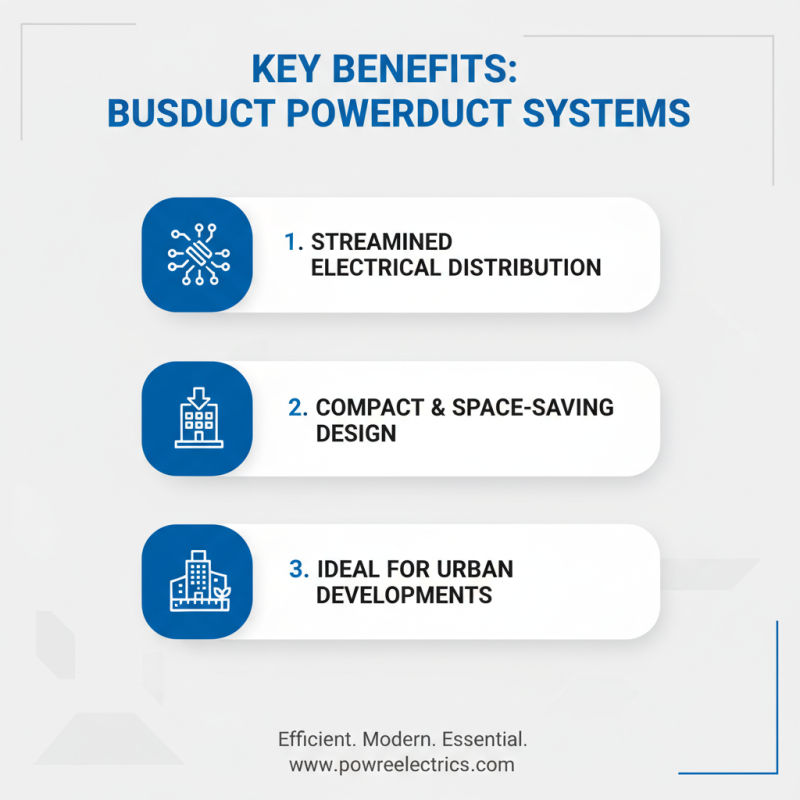
Busduct powerduct systems have become pivotal in modern electrical installations. One major benefit is their ability to streamline electrical distribution. These systems allow for a more compact design. This, in turn, saves valuable space within facilities. A space-efficient system is essential for urban developments, where every square foot matters.
Another advantage is the enhanced safety they provide. Busduct systems typically come with better insulation and reduced risk of overheating. This feature minimizes potential fire hazards, providing peace of mind to facility managers. Additionally, their modular design allows for easy modifications as power needs change. This adaptability can reduce long-term capital expenditures.
However, installing busduct systems isn’t without challenges. Proper training is essential for personnel handling these systems. A lack of expertise can lead to installation errors. These errors might cause outages or equipment damage. Users should also consider regular maintenance to ensure long-term reliability. Overall, while busduct powerduct systems offer significant benefits, careful planning and skilled implementation are necessary for their successful integration.
Comparison of Busduct Systems with Traditional Wiring Methods
Busduct systems offer significant advantages over traditional wiring in modern electrical installations. One notable difference is the ease of installation. A busduct can be installed faster than several runs of cable. This means reduced labor costs and quicker project completion. Under tight deadlines, this aspect can be crucial. Moreover, modular designs allow for easy reconfiguration as needs change.
Heat dissipation in busduct systems is another compelling advantage. Traditional wiring may lead to overheating in crowded conduits. Busduct systems are designed to manage heat more effectively. They also tend to have higher current ratings, which can increase overall efficiency. However, maintenance practices for busducts may vary. Some engineers find it challenging to adapt to these systems.
While busduct systems excel in many areas, they are not without intricacies. They can be more expensive upfront compared to traditional wiring methods. Also, there might be a learning curve for teams accustomed to conventional installations. In discussing reliability, both methods have their merits. Each approach comes with its own set of challenges and benefits.
Applications of Busduct Powerduct Systems in Various Industries
Busduct powerduct systems have gained traction across various sectors due to their efficient electrical distribution. In industrial settings, they excel in connecting high-power equipment. This system reduces the risk of electrical failures, making it ideal for manufacturing plants. According to a report from the International Energy Agency, implementing modern power distribution systems can enhance efficiency by up to 20%.
In commercial buildings, busduct systems cater to the growing demand for reliable energy management. They provide flexibility during renovations or expansions, adapting to changing electrical loads. According to research from the Electric Power Research Institute, businesses report a 15% reduction in installation time compared to traditional wiring methods. Despite these advantages, it’s essential to consider potential downsides such as the initial investment costs and the need for professional installation.
Moreover, data centers benefit significantly from busduct systems. These facilities require constant uptime. As published in the Journal of Electrical Engineering Research, busduct solutions can lower thermal resistance, ensuring stable operations under heavy loads. Therefore, while the benefits are substantial, careful planning and execution are crucial for optimal performance.
Future Trends and Innovations in Busduct Powerduct Technology
As we look towards the future, busduct powerduct technology is evolving. Innovations are enhancing efficiency and safety. New designs focus on compactness without sacrificing performance. These advancements provide flexibility for modern electrical installations. Enhanced insulation materials are also making systems more reliable.
Tips: Consider assessing your current infrastructure for upgrades. Look for compatibility and future scalability.
Another exciting trend is the integration of smart technology. Systems now incorporate sensors and monitoring software. These features allow real-time data analysis, improving energy management. Quick detection of issues reduces downtime and maintenance costs.
Tips: Invest in training for your team. Understanding these technologies will maximize their benefits.
Busduct systems are becoming increasingly modular. This allows for easier customization to cater to specific needs. It reduces installation time and adapts to evolving requirements. With these ongoing innovations, efficiency is no longer a challenge, but an achievable goal.
Top Advantages of Busduct Powerduct Systems in Modern Electrical Installations
| Advantage |
Description |
Future Trends |
| High Efficiency |
Busduct systems offer lower resistance, leading to reduced energy loss. |
Integration with smart grid technology for real-time monitoring. |
| Space Saving |
Compact design allows for more efficient use of space in installations. |
Innovative designs that further reduce footprint. |
| Flexibility |
Easily customizable layouts to accommodate changing needs. |
Modular systems that enable quick reconfiguration. |
| Improved Safety |
Reduces the risk of electrical faults and fire hazards. |
Advanced insulation materials to enhance safety further. |
| Ease of Maintenance |
Simplified access for inspections and upgrades. |
Automation of maintenance alerts through IoT solutions. |