
Leave Your Message
-
E-mail
-
Whatsapp

-
WeiChat

Global buyers rarely choose a busduct supplier on price alone. Busduct Electrical systems must carry demanding loads, fit available space, and connect reliably with a building’s power distribution plan. A factory floor may need a different configuration from a high-rise tower or data center. Details matter: rated current, conductor material, insulation, enclosure protection, tap-off units, and installation support can all affect a project. Small mismatches become expensive later. They can delay installation or complicate maintenance.
This guide introduces 10 busduct electrical suppliers for buyers comparing options across regions. It considers practical factors such as product range, customization, technical documentation, manufacturing experience, and after-sales service. Buyers should also confirm applicable certifications, test reports, delivery schedules, and local support directly with each supplier. Product claims and standards can vary by market, and a listing alone cannot verify suitability for a specific project. That deserves a second look. The right choice depends on the site, load profile, budget, and project timeline—not a ranking by itself. No shortlist is perfect, and supplier information can change. Treat these profiles as a starting point, then review drawings, specifications, and references with qualified electrical professionals before making a decision.
10 Best Busduct Electrical Suppliers for Global Buyers
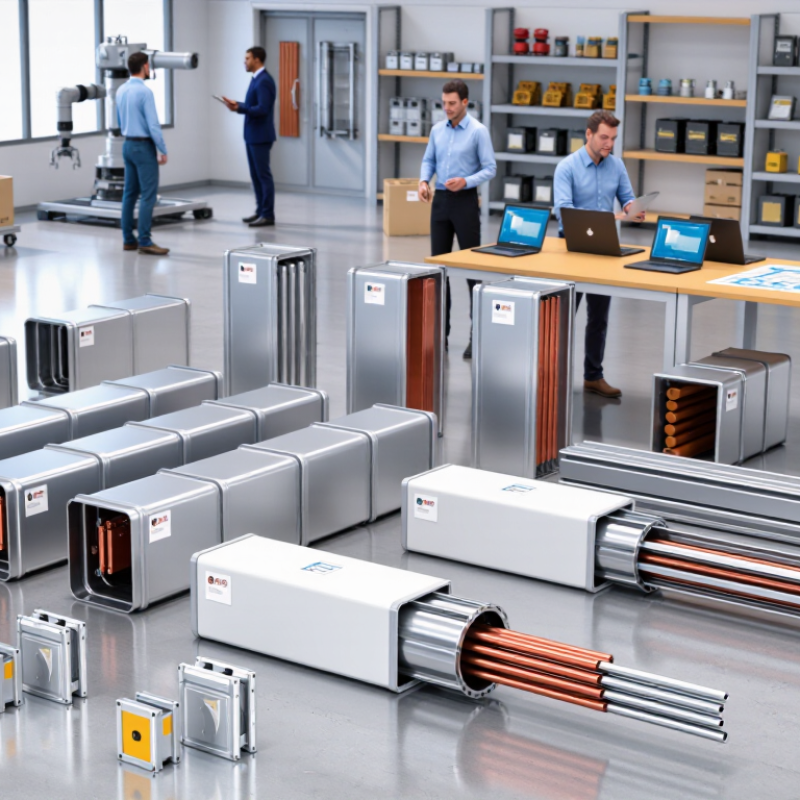
Busduct systems move electrical power through enclosed metal housings containing insulated conductors. They connect transformers, switchgear, and distribution panels, then deliver power to loads along a building. Compared with separate cable runs, a busduct can provide a compact, organized route, especially in factories, data centers, and tall buildings. Plug-in tap-off units allow approved connection points along compatible sections. This can make later changes easier, though every adjustment still needs proper review. Connections matter. A poorly planned route can complicate maintenance or leave little room for future capacity.
In practice, the route may pass above machinery, through a service corridor, or between floors. Designers consider load, voltage drop, fault levels, ambient conditions, enclosure rating, and available space. They also check support spacing, joint access, and protection coordination. These details affect performance as much as the product specification. Busduct is not automatically the best choice; short, irregular routes may suit cable better. I have seen layouts look neat on drawings yet prove awkward when workers need access to a joint. That deserves a second look. Final selection and installation should follow project requirements and applicable local standards.
Tips: Confirm the load schedule and future expansion plans. Check clearances, supports, and tap-off locations before ordering. Ask a qualified electrical professional to review the design.
Supplier evaluation framework for global buyers. The entries below describe verifiable supplier capabilities and busduct system facts; they are not a ranked directory of named companies.
| No. | Supplier capability to evaluate | Relevant busduct system fact | What global buyers should verify |
|---|---|---|---|
| 1 | Standards and certification support | Busbar trunking systems are covered by IEC 61439-6; busways for North American markets are covered by UL 857. | Request the applicable product certificates, test documentation, and confirmation that the offered configuration falls within their scope. |
| 2 | Rated-current selection | Busduct is available in different current ratings; the required rating depends on the load, installation conditions, and system design. | Ask for rating tables, temperature-rise test information, and design assumptions for the proposed installation. |
| 3 | Conductor material options | Busduct conductors are commonly made from copper or aluminum. Their electrical and physical properties differ, so the choice should be assessed as part of the complete system design. | Confirm conductor material, plating where applicable, rated performance, joint design, and the basis for comparing alternatives. |
| 4 | Short-circuit performance | A busduct system must be suitable for the prospective short-circuit conditions at its installation point; withstand performance is configuration-dependent. | Check rated short-time withstand current, peak withstand current, protective-device coordination, and supporting test evidence. |
| 5 | Enclosure and ingress protection | Ingress protection classifications use the IP Code defined by IEC 60529. The required protection depends on the environment and installation location. | Verify the tested IP rating for straight sections, joints, tap-off points, and other relevant accessories in the selected configuration. |
| 6 | Tap-off and distribution options | Busduct can distribute power along a route, with compatible tap-off units used to connect loads at designated points where the system is designed for them. | Confirm tap-off unit ratings, protection options, permitted locations, interlocking arrangements, and compatibility with the busduct range. |
| 7 | Route engineering and coordination | Busduct is assembled from sections and fittings such as elbows and tees, so accurate route planning is important for installation and equipment coordination. | Evaluate drawing support, interface coordination, measurement procedures, section schedules, and the process for approving route changes. |
| 8 | Fire and building-interface requirements | Where a busduct passes through a fire-rated wall or floor, the penetration may require a firestop solution that meets the applicable building and fire codes. | Confirm the required firestop details, tested assembly documentation, responsibility boundaries, and local-code acceptance. |
| 9 | Installation and commissioning support | Busduct performance depends on correct assembly, jointing, support, and installation in accordance with the product instructions and project requirements. | Request installation manuals, joint-torque instructions where applicable, inspection checklists, commissioning guidance, and training availability. |
| 10 | Documentation, service, and delivery planning | A busduct project typically requires coordinated product schedules, layout information, installation documents, and service guidance throughout its lifecycle. | Assess documentation language, spare-parts availability, warranty terms, technical response process, export packaging, and delivery lead-time commitments. |