China Top Busway Electrical System Benefits and Applications Explained
The Busway Electrical System represents a significant advancement in modern energy distribution. As industry expert Dr. Richard Chen states, "Busway systems innovate electrical efficiency." This innovation provides a compact, flexible solution for power management. In urban environments, where space is limited, the Busway Electrical System excels.
Cities in China are rapidly adopting this technology. With the growing demand for energy, the efficiency of Busway systems plays a vital role. These systems help reduce energy loss. However, a critical examination of installations is necessary. Solutions must align with specific requirements of the infrastructure.
Developing standards and best practices can help enhance reliability. The Busway Electrical System has great potential, yet challenges remain. Continuous improvement and adaptation are crucial for optimal performance. Understanding both benefits and limitations is essential for stakeholders.

Overview of China's Top Busway Electrical Systems
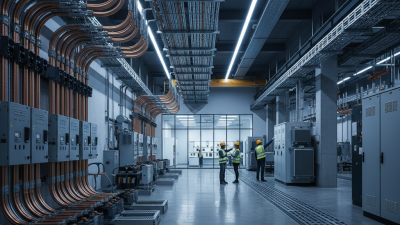
China's busway electrical systems represent a significant advance in urban power distribution.
These systems effectively transport electricity through insulated metal conductors. Their compact design allows for efficient space utilization in crowded urban areas.
Maintenance is simpler compared to traditional wiring methods. This leads to reduced downtime and improved reliability.
The applications of busway systems are diverse. They are commonly used in commercial buildings, factories, and rail systems.
These environments benefit greatly from the durability of busway systems. They withstand harsh conditions and heavy electrical loads.
However, there are challenges. Installation requires skilled technicians to ensure safety and performance.
Misalignment during installation can lead to increased resistance and overheating.
Careful planning is crucial to avoid these pitfalls.
Environmental considerations are also essential. While busways are efficient,
their production can be resource-intensive. Companies need to evaluate the lifecycle impacts.
Striking a balance between efficiency and sustainability is key.
Continuous advancements in technology are encouraged to address these challenges, ensuring that busway systems remain a viable option for future infrastructure needs.
Key Benefits of Implementing Busway Electrical Systems in China
Busway electrical systems are gaining traction in China, providing various advantages for both industries and infrastructure. One key benefit is the enhanced safety they offer. These systems minimize the risks associated with traditional wiring, reducing fire hazards. Busways are easier to install and maintain, resulting in lower overall costs.
Another notable advantage is flexibility. Busway systems allow for easy modification and expansion. This adaptability caters to the needs of dynamic businesses. Companies can rearrange spaces without extensive downtime, which is critical in fast-paced environments. However, this flexibility might lead to over-optimizing a system too frequently, which can create confusion in wiring layouts.
Moreover, the energy efficiency of busway systems is impressive. They can effectively handle higher loads with less power loss, improving overall energy management. With rising energy costs, this is an essential aspect for many companies. Yet, proper training is necessary to maximize these benefits. Staff should be updated regularly about best practices and technical details. This helps avoid potential installation errors that can negate the expected advantages.
Applications of Busway Systems in Various Industries
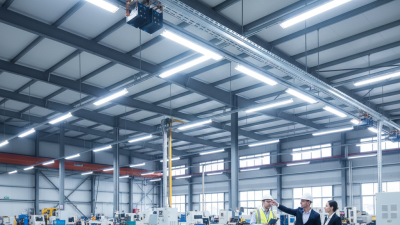
Busway systems are becoming increasingly popular across various industries. They offer a flexible and efficient way to distribute electrical power. In manufacturing, for instance, busway systems help streamline operations. They easily connect machines and tools, enabling quick adjustments and minimizing downtime. This flexibility is vital in fast-paced environments.
Healthcare facilities also leverage busway systems for reliable power supply. Life-saving equipment depends on uninterrupted electricity. By utilizing busway technology, hospitals can ensure that essential devices run smoothly. However, the design and implementation must be carefully considered. Poorly planned installations can lead to outages, impacting patient care.
In commercial buildings, busway systems support energy-efficient designs. They reduce wiring needs and allow for easy expansion as businesses grow. Yet, organizations must be cautious not to overlook routine maintenance. Neglecting this can lead to increased risks. Electrical systems should be regularly inspected to maintain safety and efficiency.
China Top Busway Electrical System Benefits and Applications Explained
| Industry |
Benefits |
Applications |
| Manufacturing |
High reliability and safety, easy distribution of power. |
Feeding power to heavy machinery and assembly lines. |
| Commercial buildings |
Flexible installation and maintenance. |
Lighting systems and HVAC systems. |
| Data centers |
Optimized space utilization and scalability. |
Powering servers and networking equipment. |
| Transportation |
Robust infrastructure and reduced installation time. |
Powering railways and public transport systems. |
| Healthcare |
Ensures uptime of critical systems and patient safety. |
Powering medical equipment and laboratory facilities. |
Comparative Analysis: Busway Systems vs. Traditional Electrical Solutions
Busway systems are gaining traction as a modern alternative to traditional electrical solutions.
A report from the International Energy Agency noted that busway systems can improve
energy efficiency by up to 20%. This reduction is crucial
for industries aiming to lower their carbon footprints. In comparison, traditional wiring can lead
to increased energy losses due to resistance, elevating operational costs.
Another benefit of busway systems is their scalability.
Unlike traditional systems that often require extensive rewiring for expansion, busway systems can
be easily modified. This flexibility allows businesses to adapt to changing needs without significant
downtime. The installation process is also less labor-intensive. A study from the Electric Power
Research Institute found that busway installations require roughly 30%
less labor compared to conventional methods.
However, there are challenges. Initial costs for busway systems can be higher, which may deter
some businesses. Additionally, not all facilities are suited for busway systems without modifications.
The transition may require thorough planning and assessment. Therefore, companies must weigh these
factors carefully. Understanding the trade-offs between initial investment and
long-term savings is essential for making informed decisions.
Future Trends and Innovations in Busway Electrical Systems in China
In recent years, busway electrical systems in China have evolved significantly. These systems offer advantages like
efficient power distribution and reduced installation time. They are increasingly used in commercial buildings and industrial facilities.
Their modular design allows for easy expansion. However, challenges remain, such as integration with existing infrastructure.
Looking ahead, future trends point towards greater sustainability. Innovations like
smart monitoring systems are on the rise. These technologies can optimize energy use and ensure reliability.
However, this progress comes with concerns about cybersecurity and data management.
As the industry moves forward, collaboration among stakeholders is vital. Engineers must find a balance between
innovation and safety standards. Developing high-quality materials is also crucial for long-term durability. The ongoing research will shape the
future of busway electrical systems in China. Adapting to these changes will be essential for all involved.