
Leave Your Message

What Is the Best Aluminum Bus Duct in 2026?

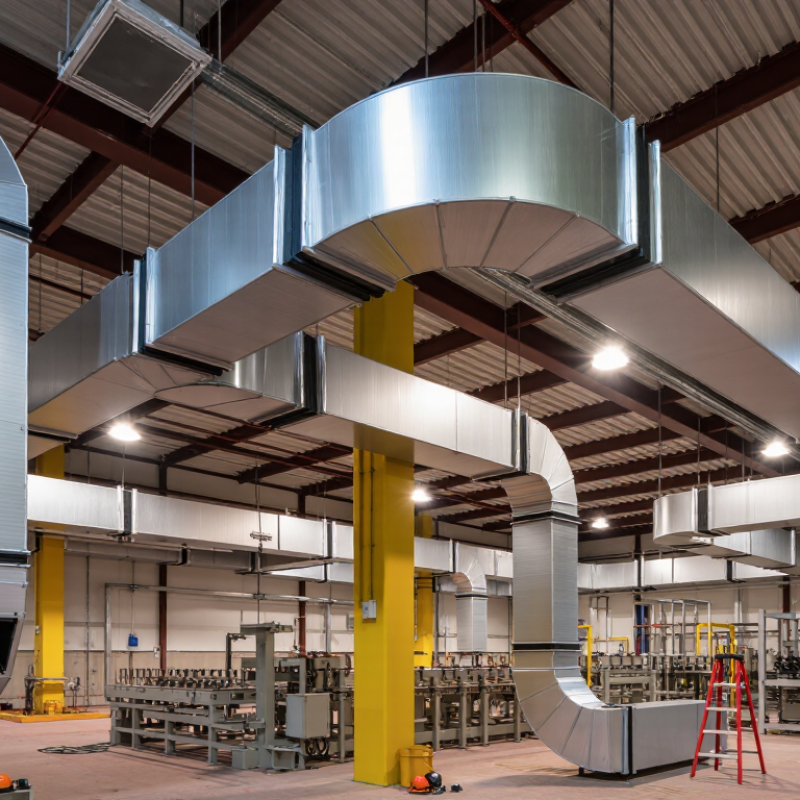
Choosing the best Aluminum Bus Duct in 2026 takes more than comparing price tags. The right system must fit the load, installation route, environment, and plans for future expansion. A crowded plant ceiling, for example, can make compact dimensions and accessible joints especially valuable. A dusty production area may place greater importance on enclosure protection and maintenance access.

A verified expert quotation cannot be supplied because no source articles or expert references were provided. Rather than invent one, this guide uses a clearly identified editorial perspective: “A bus duct is only a good choice when its capacity, surroundings, and maintenance needs match the real installation.” — Editorial design principle, not a published quotation.

That distinction matters. Manufacturer data, certified ratings, and project-specific engineering should support any final decision. Buyers should compare conductor material, current rating, temperature rise, short-circuit performance, joint design, and available fittings. They should also confirm that the proposed route allows safe installation and inspection. Small details matter.

This guide will assess leading Aluminum Bus Duct options through practical selection criteria, not sweeping brand claims. It will explain where aluminum systems can offer useful weight and cost advantages, and where careful sizing or additional checks may be needed. No single product is best for every building. The strongest choice is the one whose documented performance matches the site—and still makes sense years after installation.
What Is the Best Aluminum Bus Duct in 2026?

What an Aluminum Bus Duct Is and How It Works

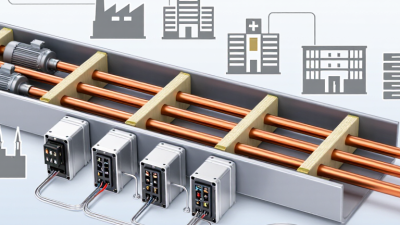
An aluminum bus duct is a enclosed distribution system that carries electrical power through a building. Inside its metal housing, insulated aluminum conductors run in parallel. The enclosure protects them from accidental contact and helps contain the assembly in a defined route. Think of it as a rigid power pathway, not a loose bundle of cables.

Power enters from a switchboard or transformer and travels along the conductors. At planned points, compatible tap-off units connect equipment such as motors or lighting panels. Joints link duct sections, so their alignment and tightening matter. A poor connection can create heat. That matters.

Aluminum is lighter than copper, which can ease handling during installation, but conductor size must suit the load, route length, and operating conditions. Designers also check voltage drop, fault withstand, enclosure rating, and available space. Bus duct is not a plug-and-play cure for every layout. I would not assume the shortest route is best; access for inspection and future changes can be just as important. Installers should follow the system’s instructions and verify each joint, support, and protective connection before energizing it.
Key Factors for Evaluating Aluminum Bus Ducts in 2026

Evaluating an aluminum bus duct in 2026 starts with the actual load, not a headline capacity. Compare continuous current ratings with expected demand, ambient temperature, enclosure conditions, and installation layout. Aluminum conducts less effectively than copper, so equivalent applications may require larger conductors. Check voltage drop across the planned run, especially where equipment sits far from the supply. Small details matter.

Review the fault-current rating and confirm it matches the protection devices and system design. Then inspect the enclosure rating for dust, moisture, and likely exposure; an indoor corridor and a washdown area are not interchangeable. Look closely at joint design, connection instructions, and access for inspection. A sound rating sheet cannot compensate for a cramped installation. Not on paper alone.

Thermal expansion, support spacing, and route changes also affect long-term performance. Ask how the manufacturer specifies torque, joint preparation, and periodic checks, and make sure the installation team can follow those instructions consistently. Compare total installed cost, including supports, fittings, labor, and future access—not just the conductor price. Requirements vary by project, so confirm applicable standards and obtain a qualified engineer’s review before selection. Some assumptions may need revisiting once the route and load profile are known.

What Is the Best Aluminum Bus Duct in 2026? — Key Factors for Evaluating Aluminum Bus Ducts
Evaluation Factor What to Evaluate Practical Verification
Standards and certification The busway should be designed, tested, and documented for the applicable market and installation. IEC 61439-6 covers busbar trunking systems; UL 857 covers busways in the United States. Check the product’s certification and test documentation, and confirm that the specific configuration, ratings, and accessories are within its certified scope.
Rated current and load profile Select a rated current that accommodates the calculated load, expected demand, and planned growth. Aluminum conductors generally need a larger cross-section than copper conductors for comparable electrical performance. Compare declared ratings under the manufacturer’s stated installation and ambient conditions. Apply any required derating and verify the rating for the complete run, including joints and fittings.
Voltage drop and energy losses Voltage drop depends on conductor resistance, circuit length, current, power factor, frequency, and system arrangement. Aluminum’s lower conductivity than copper makes a project-specific calculation important. Request calculated voltage drop and losses for the actual route and operating load. Compare options using the same load, length, voltage, and design assumptions.
Short-circuit withstand The assembly must withstand the prospective fault current and protective-device clearing conditions at its point of installation. Match the documented short-circuit withstand or conditional rating to the available fault current and upstream protection. Confirm the rating applies to the selected busway configuration.
Joint design and maintenance Electrical joints are important connection points. Their design, assembly method, and accessibility affect reliability and maintenance requirements. Review joint test evidence, installation instructions, inspection access, and specified tightening or monitoring procedures. Follow the manufacturer’s instructions for surface preparation and any joint compound.
Enclosure protection Choose an enclosure suited to the environment, including dust, moisture, washdown, and indoor or outdoor exposure. Ingress-protection ratings are defined by IEC 60529. Specify the required IP rating for the actual exposure. For example, IP54 indicates dust-protected construction and protection against splashing water; it is not a substitute for checking the full site conditions.
Ambient temperature and installation Allowable current depends on the rated ambient temperature and installation conditions, such as enclosure, orientation, ventilation, and grouping with other equipment. Use the manufacturer’s temperature and installation data rather than assuming a universal derating factor. Confirm the rating covers the intended mounting arrangement and site ambient.
Neutral and grounding arrangement Choose the number and size of neutral conductors based on the load, including nonlinear loads that can increase neutral current. Confirm the protective-earth or grounding path is suitable for the system. Review the single-line diagram, phase and neutral loading, harmonic assessment where relevant, and grounding requirements. Specify a reduced or enlarged neutral only when supported by the design calculation.
Thermal expansion and route layout Aluminum expands more with temperature than copper; its linear thermal-expansion coefficient is approximately 23 µm/(m·°C). Long runs and temperature variation therefore require appropriate movement provisions. Check the manufacturer’s guidance for expansion units, supports, and clearances on the actual route. Coordinate these details with building movement joints and equipment connections.
Tap-off and future flexibility Plug-in or feeder tap-off units can make distribution changes easier, but their ratings, interlocks, and permitted positions must suit the busway system and load plan. Verify tap-off ratings, protection-device compatibility, access clearances, and the permitted number and spacing of units. Confirm that planned future connections are allowed by the system design.
Installation and lifecycle cost Aluminum bus duct can reduce conductor material cost and weight, but the best overall choice depends on the complete installed system, operating losses, installation labor, inspection, and maintenance. Compare total installed and lifecycle cost using equivalent electrical ratings, route lengths, load profiles, accessory scope, labor assumptions, and maintenance requirements—not conductor price alone.

How Aluminum Bus Duct Systems Compare by Design and Performance

What Is the Best Aluminum Bus Duct in 2026?

How Aluminum Bus Duct Systems Compare by Design and Performance

Aluminum bus duct can reduce system weight, but conductor material alone does not determine performance. The Aluminum Association’s Aluminum Design Manual lists aluminum density at about 2.70 g/cm³; Copper Development Association data puts copper near 8.96 g/cm³. That difference can ease lifting and support demands during installation.

Electrical-grade aluminum has roughly 61% of copper’s conductivity on the International Annealed Copper Standard scale, so designers generally need a larger conductor cross-section for comparable current. Space matters.

Compare complete systems, not just metal. IEC 61439-6 sets requirements for busbar trunking systems, including construction and verification. Look closely at rated current, temperature rise, short-circuit withstand, enclosure protection, joint design, and installation conditions.

A compact housing may suit a crowded plant room, while a lighter run may simplify overhead support. Neither feature guarantees better performance. Check how the manufacturer’s test data reflects real ambient temperatures, ventilation, and mounting orientation.

Also review joint access: a connection hidden above a ceiling can make inspection harder. That detail is easy to miss. Aluminum may be a practical fit, but project-specific load calculations and verified test results should guide selection.

Where Different Aluminum Bus Duct Types Are Best Used

What Is the Best Aluminum Bus Duct in 2026?

Where Different Aluminum Bus Duct Types Are Best Used

The best aluminum bus duct depends on the route, load, and environment. Feeder bus duct suits fixed runs between transformers, switchgear, and distribution panels. Its enclosed conductors work well in plant rooms and service corridors where access is limited. Measure the route carefully; a few awkward bends can complicate installation.

Plug-in bus duct is useful in workshops and production areas where equipment locations may change. Tap-off units let teams connect loads along the run without routing separate cables from a panel. This flexibility has limits. Every tap-off needs the correct rating, and the duct must be positioned for safe access.

For vertical distribution, riser bus duct can serve multiple floors in offices, apartments, or hospitals. Outdoor or weather-resistant systems may fit exposed service routes, but enclosure protection must match rain, dust, and temperature conditions. Lighting bus duct can support rows of fixtures in large retail spaces or warehouses. Don’t choose by type alone. Check current capacity, fault ratings, supports, and installation conditions with a qualified electrical professional. A specification can look fine on paper and still overlook a cramped ceiling or future load changes.

What Is the Best Aluminum Bus Duct in 2026?

Where different aluminum bus duct types are best used

Feeder busway suits fixed power distribution, while plug-in busway is useful where loads or tap-off points may change. Outdoor-rated systems are designed for exposed environments; lighting busway serves lighting circuits; and compact sandwich busway can suit space-constrained installations. Fit scores are a qualitative guide, not test results or a substitute for checking the system rating, environment, and applicable electrical code.

How to Select an Aluminum Bus Duct for a Project

Select an aluminum bus duct by matching it to the installation, not by comparing current ratings alone. Confirm system voltage, continuous load, short-circuit withstand, and expected future capacity with the project engineer.

Then check the route. A straight line on a drawing may meet a beam, pipe, or low ceiling on site. Easy to miss. Measure clearances around bends, joints, tap-off points, and maintenance access before fixing the layout.

Aluminum is lighter than copper, which can ease handling on long runs. But its conductivity is lower, so conductor size and voltage drop need careful review. Check ambient temperature, enclosure protection, moisture, dust, and corrosion exposure. These conditions affect the required configuration.

Review support spacing and thermal expansion details too, especially where the run crosses building movement joints. A rushed estimate can leave too little room for fittings; it happens, and revising the route later is costly.

Ask for verified temperature-rise and short-circuit data, installation instructions, and compatible accessories. Finally, compare the full installed arrangement, including supports and connections, rather than the duct alone.

A qualified electrical professional should confirm the design against the project’s specifications and operating conditions.