How to Choose the Right Busway Systems Electrical for Your Needs?
Selecting the right Busway Systems Electrical for your needs is a critical decision. It's more than just choosing a product; it requires understanding various factors. Different environments and applications call for different specifications.
Busway Systems Electrical offer flexibility and efficiency in power distribution. However, not all systems are the same. Their performance can vary based on design and installation quality. You must evaluate your specific requirements carefully. This includes power capacity, environmental factors, and load demands.
A small oversight in your choice can lead to inefficiencies. For instance, underestimating load requirements can cause headaches later. On the other hand, overspending on unnecessary features isn't wise. It's essential to balance performance and cost. Furthermore, consulting with experts can guide you in making informed decisions. Their insights can help you avoid common pitfalls and ensure reliability.

Understanding Busway Systems: Types and Applications
Busway systems, often overlooked, play a crucial role in distributing electrical power within commercial and industrial settings. Understanding their types and applications can greatly enhance efficiency and safety in your facility. Various designs exist, such as insulated busways, open busways, and enclosed busways, each serving distinct purposes. For instance, insulated busways are ideal for environments where dust or moisture is present, providing superior safety and reliability.
Data from the Electric Power Research Institute indicates that the adoption of busway systems can reduce energy losses by up to 20%. This is significant for businesses aiming to lower overhead costs. In contrast, an open busway system allows for easier access and maintenance, but offers less protection against environmental factors. Choosing between these options requires careful consideration of your installation's unique needs, including space constraints and weather conditions.
Moreover, installing the wrong type can lead to inefficiencies. Regular assessments of your system's performance are essential. Factors like amperage demand and load characteristics may shift over time, rendering your initial choice less effective. Balancing these variables is not straightforward, but it's essential for long-term operational success. Understanding the intricacies of busway systems helps you make informed decisions that could lead to improved system performance.
Choosing the Right Busway Systems Electrical
Key Factors to Consider When Choosing Busway Electrical Systems
When selecting busway electrical systems, several key factors should guide your decision. Begin by assessing the power requirements of your facility. Consider the voltage levels, amperage, and the specific loads you will be supporting. Accurate assessment ensures your chosen system can handle the demand without issues.
Next, think about the installation environment. Will the busway be installed indoors or outdoors? Environmental factors, such as temperature and humidity, play a crucial role in durability and performance. Choose materials that resist corrosion and heat, especially for harsh conditions. Size is another critical factor. The dimensions of the busway must fit seamlessly within your layout while ensuring easy access for maintenance.
Lastly, reflect on future scalability. Your needs may change over time, so flexibility is vital. Opt for systems that allow for expansion or modifications with minimal disruption. Keep in mind that your choice impacts energy efficiency and operational costs in the long run. Balancing initial costs with future needs is essential for a sustainable solution.
How to Choose the Right Busway Systems Electrical for Your Needs? - Key Factors to Consider When Choosing Busway Electrical Systems
| Criteria |
Considerations |
Importance Level |
| Load Capacity |
Determine the maximum load that the system needs to handle. |
High |
| Physical Space |
Assess available installation space and layout. |
Medium |
| Material Type |
Choose between aluminum or copper busbars based on conductivity and cost. |
High |
| Environmental Conditions |
Consider factors such as temperature, humidity, and potential exposure to chemicals. |
High |
| Future Expansion |
Plan for potential increases in load and physical expansion. |
Medium |
| Installation Complexity |
Evaluate ease of installation and maintenance requirements. |
Medium |
| Safety Standards |
Ensure compliance with local and international safety standards. |
High |
Evaluating Load Capacity and Efficiency Requirements
When selecting busway systems for electrical applications,
load capacity and efficiency are critical.
According to industry standards, systems should accommodate both current and future demand.
Recent studies show that over 80% of facility managers prioritize
load capacity when choosing a busway. An insufficient capacity can lead to equipment failures or
unplanned downtime.
Efficiency also plays a vital role. A report from the Electrical Efficiency Research Group
indicates that energy losses in busway systems can reach
5-15%. Choosing a system with lower resistance can significantly reduce these losses.
For example, systems designed with advanced materials
can improve efficiency by 20%. However, balancing cost and efficiency
is challenging. Some systems offer higher efficiency at a premium price.
It's crucial to assess your needs thoroughly. Engage with
professionals who understand the nuances of
busway technology. Their insights can reveal potential pitfalls.
Assessing both load capacity and efficiency demands experience in
electrical engineering. Having a clear understanding can save time and resources in the long run.
Comparing Installation and Maintenance Costs of Busway Systems
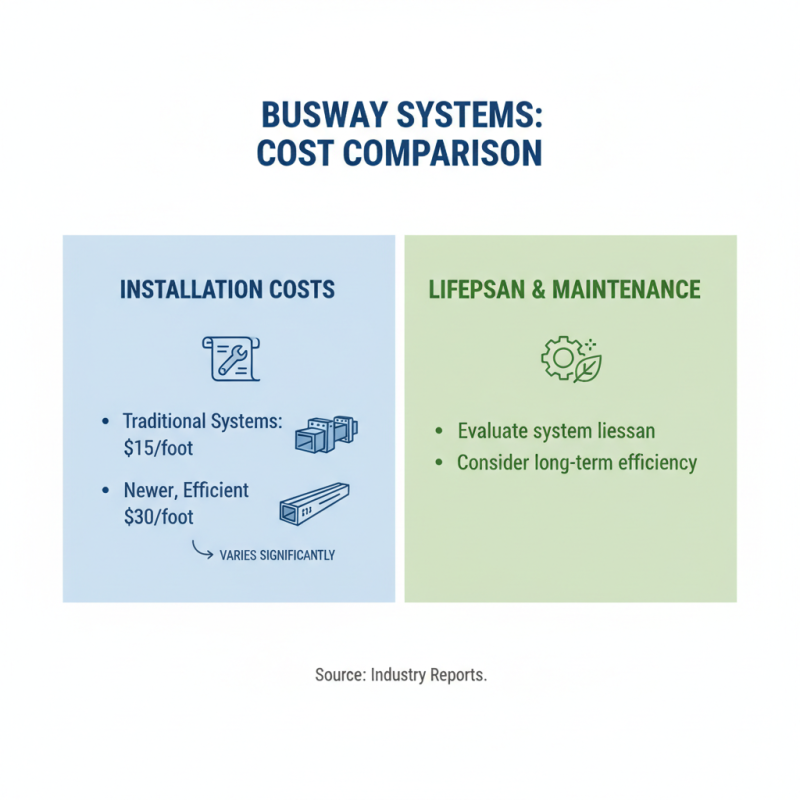
When selecting busway systems, understanding installation and maintenance costs is essential. Reports indicate that installation costs can vary significantly based on the system type. For instance, traditional busway systems may cost around $15 per foot, while newer, more efficient systems can reach $30 per foot. These figures highlight the importance of evaluating the lifespan and efficiency of each option.
Maintenance costs also play a crucial role in overall system expense. A study by the National Electrical Contractors Association suggests that regular maintenance can reduce long-term costs by up to 20%. It's important to consider that some systems may need more frequent inspections, raising their overall reliability concerns. This can lead to higher unforeseen expenses, especially if the maintenance process isn’t well-documented.
Moreover, the complexity of busway systems can affect installation time and labor costs. Simpler designs often require less specialized labor, which can reduce expenses by approximately 15%. However, more complicated systems might demand a higher level of expertise and precision, resulting in increased costs. Reflecting on these factors will help in making a more informed decision regarding the right busway system for your specific needs.